
Washing bibs: keeping them absorbent and getting stains out

Washing bibs: keeping them absorbent and getting stains out
Bibs are washed more often than anything else a baby owns, so how you wash them decides how long they last and how well they work. Two habits cause most of the trouble.
Cold rinse first
Milk, formula and most weaning food are protein-based, and hot water cooks protein into the fibre. Rinsing in cold water as soon as you can, before anything hot touches it, removes most of the stain before it sets.
A bowl of cold water by the sink is enough. It does not need to be immediate, just before the wash.
Skip the softener
Fabric softener coats fibres so they feel smooth, and a coated fibre absorbs less. On a bib that is the entire function. Softener also builds up over repeated washes, so a bib that worked well when new gradually stops working.
If bibs feel stiff, that is muslin being new. It resolves with washing, not with softener.
Detergent
A mild, fragrance-free detergent is the sensible default for anything that spends the day against a baby’s face and neck. Enzyme detergents are effective on protein stains; if skin is sensitive, a non-bio detergent with a good pre-soak achieves much the same.
Use less than you think. Excess detergent leaves residue in absorbent fabric.
Soaking
For a set-in stain, soak in cool water with a little enzyme detergent for a few hours before washing. This is far more effective than a hotter wash and it does not damage the fabric.
Do not soak coloured bibs for very long periods; some dyes run.
Sunlight on white cotton
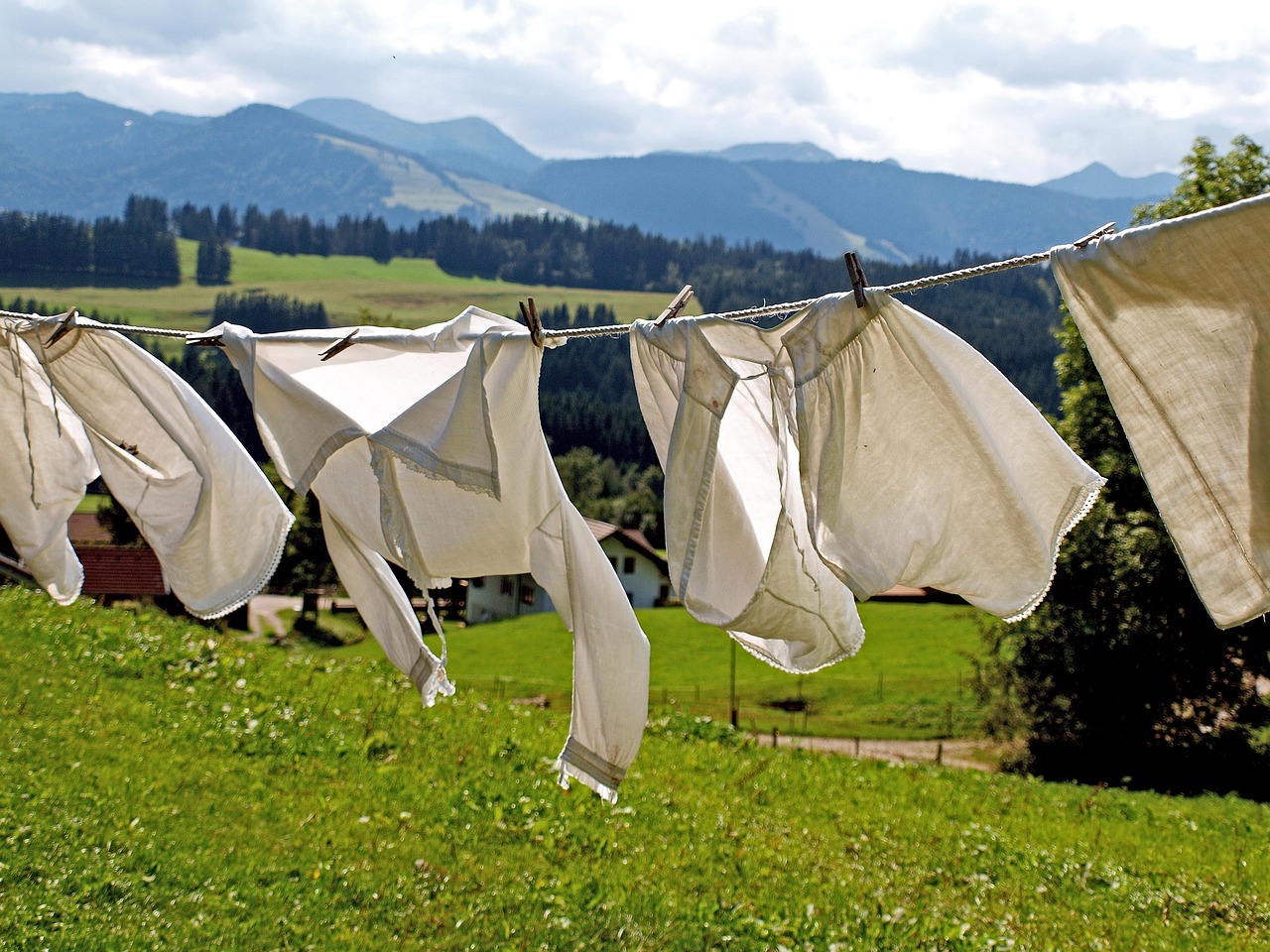
The residual yellow that milk leaves on white cotton fades in direct sunlight, often completely, and it costs nothing. Lay them out damp; the combination of moisture and light does the work.
This does not work on coloured fabric, which fades instead.
Bleach and why not
Chlorine bleach weakens cotton fibres and yellows some whites over time. On something worn against skin it is also an irritant risk. Oxygen-based products are gentler and are usually enough.
Sunlight and a soak beat both for the specific stains bibs get.
New colours
Wash new coloured bibs separately for the first two cycles. Dark and bright dyes run most in the first washes, and a bright bandana bib can tint a load of white muslin permanently.
After two washes they can join the general load.
Drying and lifespan
Line or rack dry where you can; low heat if you tumble. High heat hardens edges and shortens the life of the elastic in snap straps. Retire a bib when the fabric goes thin or the snaps stop holding — a bib that unfastens itself is more trouble than it is worth.
Old bibs make excellent cleaning cloths, so nothing is thrown away early.
Carrot, tomato and the ones that really stain
The worst offenders at weaning are carotenoid-rich foods — carrot, sweet potato, tomato — because the pigment is oil-soluble and binds to fibre. Cold rinse and an enzyme soak help, and sunlight helps considerably more.
Lay the damp bib in direct sun for a few hours and orange marks fade dramatically, often completely. It is free, it works better than bleach on this particular stain, and it does not damage the fabric.
Keeping whites white without bleach
Oxygen-based whiteners are gentler than chlorine and effective on the general greying that comes from repeated washing. Used occasionally rather than every wash, they keep white muslin looking new without weakening it.
The other half is not overloading the machine. Fabric needs room to move for detergent to reach it, and a packed drum is a common reason laundry comes out looking dull however good the detergent is.
Detergent residue and sensitive skin
Where a baby’s skin reacts, the usual culprit is residue rather than the detergent itself. Too much detergent, a machine that is overloaded, or a short cycle with a single rinse all leave surfactant in absorbent fabric, and that fabric then sits against a face for hours.
Use less detergent than the scoop suggests, add an extra rinse if your machine offers one, and skip softener entirely. That combination resolves most reactions without changing brand, and it costs nothing to try first.
The short version
- Rinse in cold first — hot water sets milk and food stains.
- No fabric softener, ever, on anything absorbent.
- Sunlight removes residual yellowing on white cotton for free.
- Wash new colours separately for the first couple of cycles.
From our shelves
- MIGIOL Baby Burp Cloths 100% Cotton Newborn Muslin Burp Cloths 10×20 inches Baby Essentials — $7.99
- Tatuo 8 Pcs Baby Muslin Bibs & Burp Cloths 6 Absorbent Layer 100% Cotton Unisex Baby Bibs — $15.99
- Muslin Burp Cloths with Snaps,Multi-Use Burpy Bib 100% Cotton for Spit Up & Drool — $19.99
Where to go next
Browse the full range on the shop page, read the frequently asked questions before ordering, or check delivery timing on the Shipping Policy page. If you would rather ask a person, contact us — the phone reaches the counter.